Africa Region

The Institut Pasteur's commitment to Sub-Saharan Africa goes back more than a century. In 1896, the Institut Pasteur of Senegal was established, laying the foundations of a collaborative approach that has grown stronger over the decades. This historical presence has gradually developed into an international network of strong partnerships between independent scientific institutions united by common heritage and a shared vision of global health.
The Institut Pasteur now maintains close ties with seven Sub-Saharan and Central African Pasteur Network member institutes in Senegal, Guinea, Cameroon, Côte d'Ivoire, Central African Republic, Niger and Madagascar.
These special partners are key scientific stakeholders recognized by the health authorities in their respective countries and firmly rooted in their regional settings. Cooperation includes regular scientific dialog, scientist exchanges, capacity building, and the creation of surveillance networks. These are closely aligned with joint research topics and programs, particularly in relation to emerging infectious diseases and antimicrobial resistance, based on the One Health approach.
Regional cooperations: future-oriented cooperation
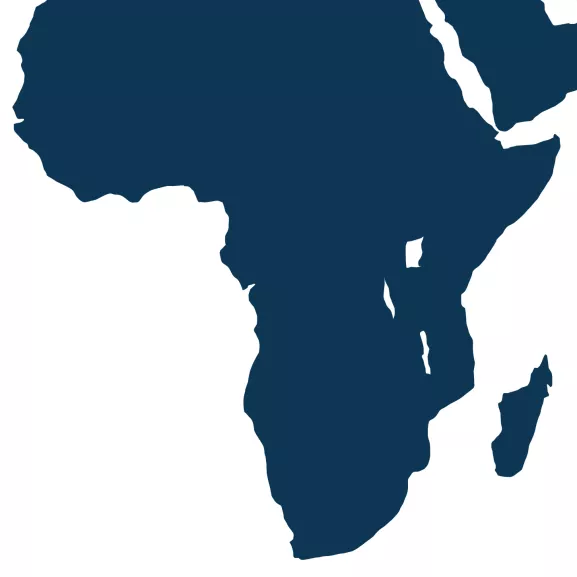
Sub-Saharan Africa provides a natural focus for international scientific efforts. The continent's major health challenges align fully with the Institut Pasteur's scientific priorities. As such, Pasteur Network member institutes in the region play a vital role as sentinels in the early detection of emerging or re-emerging health threats.
Through its pandemic preparedness initiative, the Institut Pasteur aims to strengthen collaboration with its partners, drawing on their presence in the field to better predict, detect and respond to potential outbreaks. This shared is a model for stronger scientific cooperation for the benefit of both people and global health.
Our scientific programs in the region
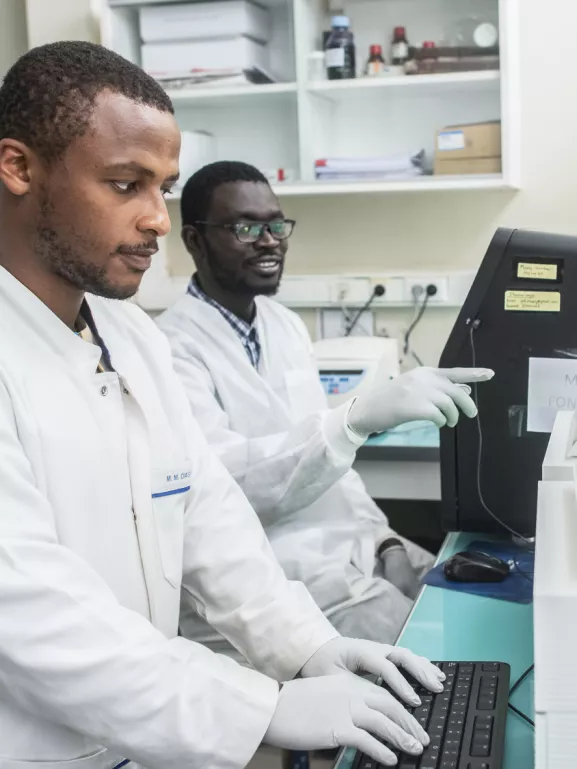
Structuring a genomic surveillance network for emerging and re-emerging pathogens across 13 countries in sub-Saharan Africa.
The OneHealthSecure project aims to support the 23 beneficiary countries in the Mediterranean region to adapt to climate change by tackling vector-borne diseases using a One Health approach.
Anticipating outbreaks through the wastewater surveillance
Establishing a regional surveillance network for antibiotic resistance to better target containment strategies against antimicrobial resistance.
Better characterize the chronic intestinal inflammation syndrome caused by malnutrition, in order to develop diagnostic tools and ultimately treatments.
Identifying locally adapted and sustainable strategies to improve hepatitis B vaccination coverage at birth.
Mapping neonatal infections and antibiotic resistance in low-income countries.
Strengthening African health institutes' capacity to integrate socio-cultural dimensions of epidemics and equipping them with tailored investigation tools.


